The Iranian girls school bombing & how we see women and girls in this conflict
The girls school bombing in Iran killing 175 people, mostly students, is nothing short of a tragedy. It also represents a symptom of a fundamentally broken approach to conflict. Specifically, the same governments overseeing this war are the ones dismantling women’s rights, protections, and political power in both countries. That is not a coincidence. It is a pattern.
Here’s what's critical: because women and girls experience violence and conflict differently and disproportionately, they must be part of any solution. This is the bedrock of the Women, Peace and Security (WPS) framework. When we exclude women from conflict prevention, resolution, negotiations, or political transitions, we don't just miss an opportunity for greater justice and accountability; we miss crucial experience about what actually works, and ensure that whatever comes next will be incomplete and unstable. This is true in Iran. It is equally true in the U.S.
The Silencing of Women's Voices
One of my deepest concerns about this unfolding crisis is stark and simple: where are the women?
Women activists in Iran and in diaspora communities have long championed human rights, women's rights, and democracy. They boldly protested the murder of Mahsa Amini at the hands of the regime and mobilized the global Women, Life, Freedom movement in 2022. At great personal risk, they called out the crackdown by the regime where over 30,000 people were killed for demanding better of their government, earlier this year. They must be central voices in any discussion of the current war and the rebuilding of their own country. Through action after action, the U.S. gutted its own capacity to promote gender equality and continues to ignore the voices of Iranian women, and the Trump administration has made it clear that women's voices are optional at best and expendable at worst.
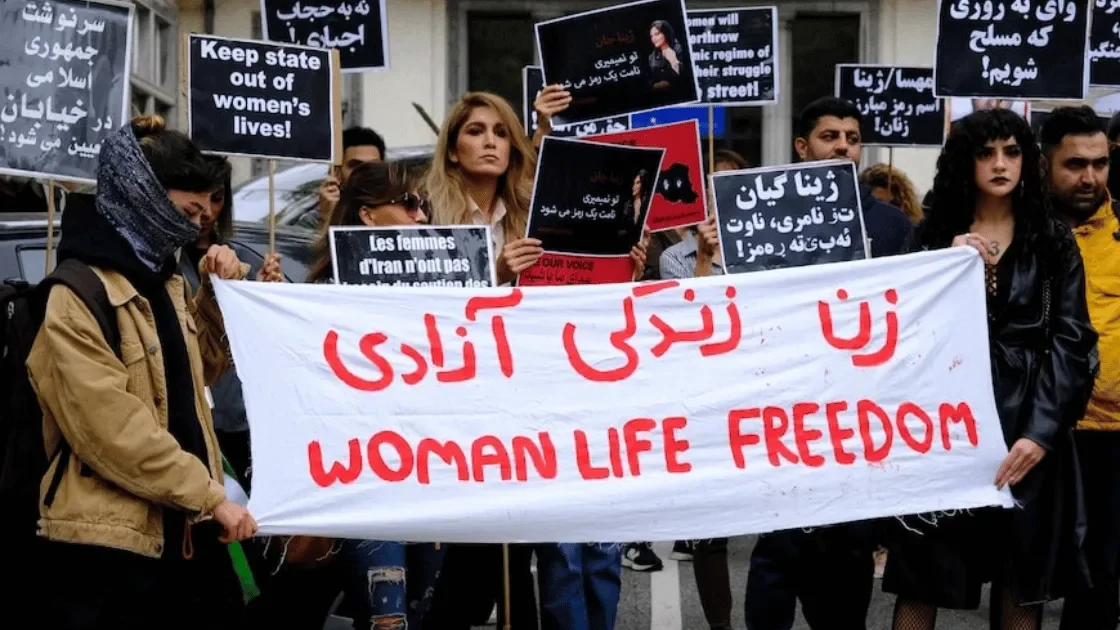
Photo from All In Together
The U.S. should be amplifying these voices loudly. Instead, they are speaking over Iranian women in the same way that they attempt to silence American women who speak up about their own rights.
Investigations, Finger Pointing, and the Bigger Pattern
We need to know who is responsible so that we can all demand justice for the students, teachers, and their families.The underlying issue here is that both governments see the deaths of women and girls as acceptable casualties of war because they never valued them to begin with.
Look at the parallel track records: the Islamic Republic of Iran has brutally suppressed and killed women for decades. They have deliberately placed high-value weapons systems near a girls school. Why? Because they knew it would complicate targeting. They understand that the injury or death of women and girls is a powerful tool for shaping public perception.
The Trump administration has spent the last decade rolling back protections and rights of women - including reproductive rights, domestic violence protections, women’s health research, and defunding the very agencies and offices designed to advance gender equality, another clear example that they don’t truly care about protecting women and girls.
These aren’t unrelated stories. They are two expressions of the same logic – that women’s safety, autonomy, and lives are negotiable.